Times tables that actually stick
The chart went on the fridge, the app got downloaded, and six weeks later the sevens are still gone. The problem is almost never effort — it is the shape of the practice. Three findings from the learning-science literature do nearly all the work here, and each one changes something you can do tomorrow in about five minutes.
Why the chart on the fridge stops working
Chanting a table in order is recognition, not recall. The previous answer cues the next one, so the sequence holds itself up — and then the question arrives out of order in a word problem and there is nothing to lean on. Your child is not forgetting; they practised a different skill from the one being tested.
Dunlosky, Rawson, Marsh, Nathan and Willingham reviewed ten common study techniques in 2013 and rated only two as high utility across subjects and ages: practice testing, and distributed practice. Rereading and highlighting — the two things almost everybody does — came out low. A chart on a fridge is rereading with better graphic design.
So the whole of this page is three swaps. Retrieve instead of review. Spread it out instead of blocking it. Mix the tables up instead of doing one at a time.
The three rules, and what each looks like at your table
- 1. Retrieve, do not review Cover the chart. The useful moment is the two seconds of effortful nothing before the answer comes — that is the rep, and looking at the answer skips it. McDaniel and colleagues ran this in real middle-school classrooms in 2011 and found low-stakes quizzing beat extra review on later tests. Practically: ask, wait, let it be uncomfortable, then confirm. Wrong answers are fine and should be re-asked two minutes later.
- 2. Space it out Six minutes on five days beats thirty minutes on Sunday, and it is not close. Cepeda and colleagues synthesised the spacing literature in 2006 and found spreading practice out reliably beats massing it — their review is of verbal recall rather than maths facts, so take the direction and not the exact gaps. The practical version is the one that survives real weeks: short, daily, before something your child already wants to do.
- 3. Mix the tables up Doing twenty sixes in a row teaches the table and not the recall, because after the second question your child has stopped choosing which fact to use. Rohrer, Dedrick, Hartwig and Cheung ran a randomised trial in real seventh-grade classrooms in 2020 and found interleaved practice sharply outperformed blocked practice on a delayed test. Practically: shuffle the deck across every table your child has met.
The order, and the part that is genuinely hard
Half the deck is not work. Twos, fives and tens arrive almost free from counting, and commutativity means 7×8 and 8×7 are one fact, not two — so a child who knows the twos, fives and tens already holds most of the grid. Teaching the order 2, 5, 10, then squares, then the rest is practitioner convention rather than a research finding, and it is worth saying so; what it has going for it is that it front-loads the wins.
What is left after that is small and genuinely hard: 6×7, 6×8, 7×8, and 8×6 again from the other side. Six or so facts, for most children, which is a very different project from "the times tables" and worth saying out loud to a child who thinks they are failing at all of them.
One honest note about speed. Fluency does mean fast in the end, because a fact that takes eight seconds to compute is occupying the working memory the rest of the question needed. But speed is the output, not the training method — and it is the format that feeds maths anxiety fastest. Build the recall untimed; add the timer later, as a game, if your child wants it.
Four ways to practise, scored honestly
What each format actually trains, and how good the evidence is. The second row is the one most families are already doing, and it is the one with the sharpest trade-off.
| Format | What it trains | How good is the evidence | Watch out for |
|---|---|---|---|
| Chanting the table in order | The sequence. Useful early, because it puts the facts in the building at all. | Weak for recall. It is rereading, which the Dunlosky review rated low utility. | It feels like progress for weeks while out-of-order recall does not move. |
| A timed app drill | Speed on facts already known. Genuinely good at that one job. | Mixed. The retrieval is real; the timing is the part with no support behind it. | Speed is what anxiety takes first. If there are tears, this is usually the format. |
| A shuffled card deck, five minutes daily | Retrieval, spacing and interleaving at once — all three rules in one object. | The strongest here: practice testing and distributed practice are the two techniques Dunlosky rated high utility, and Rohrer 2020 is a classroom randomised trial. | It is boring by week two. Keep it to five minutes and stop while it is still fine. |
| A game your child builds around a table | Motivation, and the facts incidentally while they test their own game. | None directly. Treat this as the thing that makes the deck tolerable, not as a replacement for it. | Claiming it teaches the facts. It mostly teaches that maths is something you can make things out of. |
The research under this page
Unusually good evidence by the standards of parenting advice — and still mostly from students older than the ones learning times tables, which is the caveat to carry.
- Dunlosky, Rawson, Marsh, Nathan & Willingham, 2013 — Improving students’ learning with effective learning techniques: promising directions from cognitive and educational psychology. Psychological Science in the Public Interest, 14(1), 4–58. Used for the two-swaps claim: of ten common techniques, practice testing and distributed practice were the only two rated high utility, while rereading and highlighting rated low. What it does not show: Rates ten techniques across subjects and ages; practice testing and distributed practice were the only two rated high utility. It is a review of the general literature, not a study of times tables or of elementary-age children specifically.
- McDaniel, Agarwal, Huelser, McDermott & Roediger, 2011 — Test-enhanced learning in a middle school science classroom: the effects of quiz frequency and placement. Journal of Educational Psychology, 103(2), 399–414. Used for retrieval working in a real classroom rather than a lab — middle-school science, so the subject and age both differ from times tables. What it does not show: Middle-school SCIENCE, not elementary maths facts. Cited for the one thing that transfers — low-stakes retrieval beat extra review in a real classroom rather than a lab.
- Cepeda, Pashler, Vul, Wixted & Rohrer, 2006 — Distributed practice in verbal recall tasks: a review and quantitative synthesis. Psychological Bulletin, 132(3), 354–380. Used for spacing beating massing. A synthesis of VERBAL recall studies, so the direction transfers to maths facts and the specific intervals do not. What it does not show: A synthesis of VERBAL recall studies. The direction — spacing beats massing — is what carries to maths facts; the specific optimal intervals do not, and anyone quoting a number of days from this source for times tables is over-reading it.
- Rohrer, Dedrick, Hartwig & Cheung, 2020 — A randomized controlled trial of interleaved mathematics practice. Journal of Educational Psychology, 112(1), 40–52. Used for mixing the tables up. A randomised controlled trial of interleaved maths practice in real seventh-grade classes — the strongest single source on this page, and still three or four years older than the children it is being applied to. What it does not show: The strongest source in this cluster — a randomised trial in real seventh-grade classrooms, where interleaved practice beat blocked practice on a delayed test. Seventh grade is several years older than the children learning times tables, so the direction transfers and the effect size should not be quoted at a nine-year-old.
The part a deck of cards cannot do
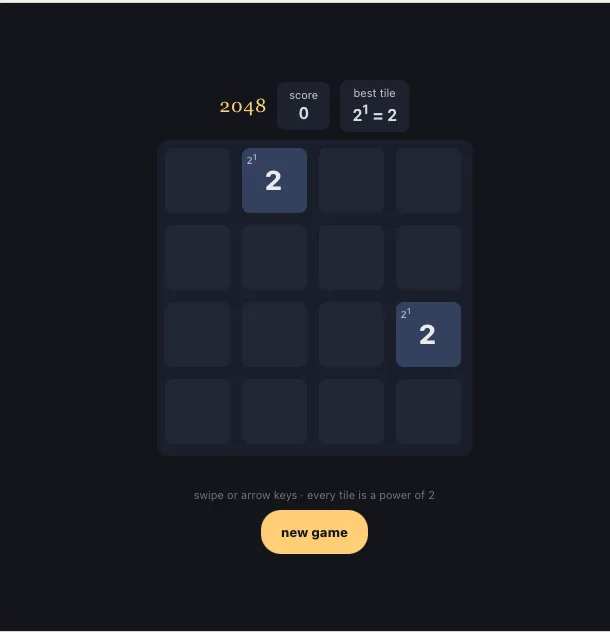
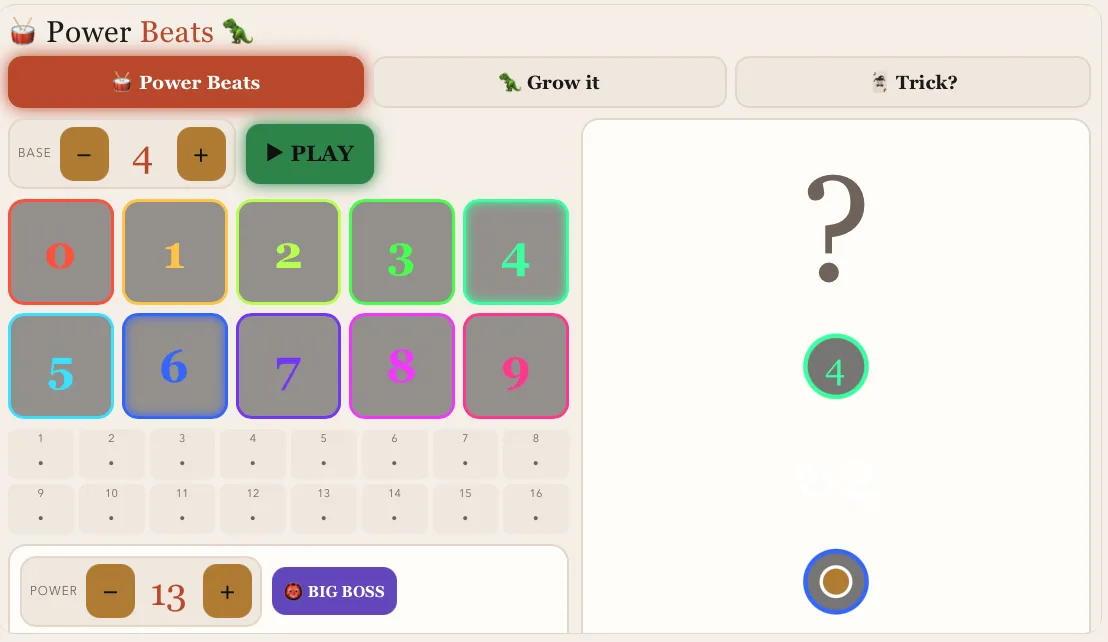
Five minutes a day is the practice — and by week three, the least popular five minutes of the day. Two games built because a child asked for them. Not fact drills, and not claimed to be.
Questions parents ask
- What is the fastest way for a child to learn times tables?
- Five minutes a day with a shuffled deck, answers covered, mixed across every table they have met. That single routine stacks all three things the evidence supports — retrieval rather than review, spaced rather than massed, interleaved rather than blocked. It is slower per session and much faster per month than a long weekend push.
- Are times tables apps any good?
- The good ones do real retrieval practice, which is the part that matters. The common flaw is that most of them time everything, and speed is the format most likely to turn a slow moment into a story about being bad at maths. If your child enjoys the timer, it is fine. If there are tears, take the timer out and the practice usually survives.
- In what order should my child learn the times tables?
- Twos, fives and tens first, then the squares, then what is left. That order is teaching convention rather than a research finding, but it front-loads the easy wins — and because 7×8 and 8×7 are the same fact, a child who has the twos, fives and tens already holds most of the grid. What remains is about six genuinely hard facts, which is worth telling them.
- Does it still matter if a kid memorizes times tables?
- Yes, for a narrow and real reason: a fact that takes eight seconds to work out is occupying the working memory the rest of the question needed. It is not about being quick for its own sake. That is also why fluency is best built untimed and only measured for speed later, if at all.
- My child knows them one day and forgets them the next. Why?
- That is the normal signature of massed, blocked practice: it produces performance during the session and little that survives the week. Spacing the same total minutes across more days, and shuffling the facts so each one has to be chosen rather than continued, is the fix — and it feels worse while you do it, because effortful recall is the thing doing the work.
Five minutes a day, and something worth building
The deck is the practice and there is no way around it. What Luchi adds is the other half: your child asks for a game built around whatever they are stuck on, builds it, and explains it back — and you get a short note about what they actually said.
Part of the series: Math games for kids
Related guides in this series
- When your child says they’re bad at math — "I’m bad at math" is a loop, not a level — and one of the clearest findings in it is about the parent doing the helping, not the child. Five things to change this week.
- When you can’t help with the math homework — You do not need to learn the new method. Four moves that need no math from you, one line each on what the number lines and arrays are for, and when to email the teacher.