A science fair project with AI, without the AI doing it
The science fair is the one piece of schoolwork where handing the whole thing to a chatbot is easiest and hardest to spot — a hypothesis, a method, a results section and a poster are all things it will write fluently in about ninety seconds. The useful finding here is not that AI is cheating. It is that in science, guidance is what does the work, which means an unguided chatbot and an unguided child fail for exactly the same reason. Here is where the machine earns its place, and the four points where it has to be kept out.
The finding that decides everything else on this page
Furtak, Seidel, Iverson and Briggs meta-analysed 37 experimental and quasi-experimental studies of inquiry-based science teaching, on a framework built specifically to separate how much guidance students were given. The overall mean effect size was .50 — inquiry teaching works. But the number that matters for a kitchen table is the other one: "studies involving teacher-led activities had mean effect sizes about .40 larger than those with student-led conditions."
Read that against the two pieces of advice a parent gets about science fair projects and both of them fall over. "Let them do it entirely themselves, it is their project" is the student-led condition, and it is the weaker one by a wide margin. "Let the AI help them figure it out" removes the guidance from the other side — a chatbot answering a question is not a teacher leading an activity, whatever it sounds like. The active ingredient is a knowledgeable someone shaping the sequence, and neither a hands-off parent nor a fluent machine supplies it.
The limits, stated here rather than buried: these are classroom studies, the youngest reaching into primary but mostly school-aged, published between 1996 and 2006 — so there is nothing about AI in them at all, and the step to a chatbot is this page's inference. The teacher-led advantage is also a comparison between teaching conditions, not a licence to take the project over. What it supports is narrow and load-bearing: in science specifically, unguided activity underperforms guided activity, and that is why the question on this page is never "should they use AI" but "which part is the machine allowed to touch".
The separate question of whether this counts as cheating · When the project has already become a fight
The six parts of a project, and who should be doing each
A science fair project is not one task, which is why "did AI do it?" is the wrong question. Only two of these six are places a chatbot genuinely helps, and the middle two are where the entire learning lives.
| Part of the project | Can AI help? | Why |
|---|---|---|
| Finding a question worth asking | Yes, as a list to reject from | Ask it for twenty questions about a topic your child already likes, then have THEM throw out eighteen and say why. The rejecting is the thinking; a list is raw material. What it must not do is pick, because the question determines everything downstream. |
| Turning that into something testable | Partly — and with you in the room | This is the hardest step and the one most often skipped. "Do plants like music" is not testable; "do bean seedlings grow taller with six hours of sound a day" is. A chatbot will do this conversion instantly and the conversion IS the science, so make it a conversation between the two of you with the machine used to check the result, not to produce it. |
| Designing the method and the controls | No | The whole discipline is here: what varies, what is held still, how many, how you would know you were wrong. Hand this over and there is nothing left to learn. If your child cannot say what their control is and why, the project has no middle — and that is the question a judge asks first. |
| Running it and recording what happened | No | Nothing to delegate. Worth saying out loud anyway: results that come out boring or wrong are not a failed project. A clean negative result with a sound method is a better project than a tidy positive one, and saying so before the data arrives is what stops the data getting helped. |
| Working out what it means | Only after they have said it first | Let them explain the result to you before anything is typed. Then, if you like, ask the machine and compare. That order matters: once a fluent explanation has been read, your child cannot un-read it, and their own account of their own experiment is the thing the project is actually for. |
| The poster, the spelling, the layout | Yes | Genuinely useful and not where the learning is. Tidying a title, checking spelling, suggesting what goes in which column — this is the part where a tool saves an evening and costs nothing. The rule of thumb: it may help present the work, never produce it. |
Four questions that tell you the project is really theirs
- 1. "What is your control, and why that one?" The single most diagnostic question available, and it takes ten seconds. A child who designed the experiment answers immediately and slightly impatiently. A child who was handed a method either has no control or has one they cannot justify. Ask it early — the week before, not the night before — because at that point there is still time for the answer to be "oh" and for the project to improve.
- 2. "What would have made you wrong?" The question professional scientists live by and the one no chatbot answer volunteers, because a fluent write-up is built to sound settled. If your child can name the result that would have refuted their hypothesis, they understood the design. If the only conceivable outcome was the one they got, the hypothesis was not a hypothesis.
- 3. "Explain this bit to me without looking" Chi's talk-aloud study of students working through worked examples found that the ones who learned "generate many explanations which refine and expand the conditions for the action parts of the example solutions", while the others "do not generate sufficient self-explanations, monitor their learning inaccurately, and subsequently rely heavily on examples". Leaning on the example and misjudging your own understanding arrive together — so an explanation given without the page in front of them is the test, and a confident reading-aloud is not.
- 4. "Which part did the computer help with?" Asked flatly, with no edge in it, early enough that the answer can change something. You are not running an investigation; you are making the division of labour a normal thing to say out loud, which is the only version of this that survives into next year. A child who can tell you that the AI listed topic ideas and fixed the poster title has done the project. A child who goes vague has told you where to look.
If the fair is on Thursday and nothing has been started
Then the research above is not what you need tonight, and pretending otherwise is useless. The triage: pick a question that can be measured in a single evening with things already in the house, run it three times rather than once, and write down what actually happened including the bit that went wrong. Three trials and an honest anomaly is a real project. One trial and a confident conclusion is a poster.
The thing to protect in a rush is the middle — the method and the controls — because that is the part with the learning in it and also, conveniently, the part a judge probes first. Let the machine help with the layout and the spelling, which is where it was always most useful anyway. The cost of a late project is a less interesting question, and that is a cost worth paying.
One more, since it is the commonest way a rushed project goes wrong: do not let the conclusion get written before the data is in. A fluent paragraph that says what the result should have been is both the easiest thing to generate and the only part of this that is genuinely dishonest rather than merely unhelpful.
Using AI for homework without it doing the homework · Telling real learning from fluent output
What "they explained it themselves" looks like as a record
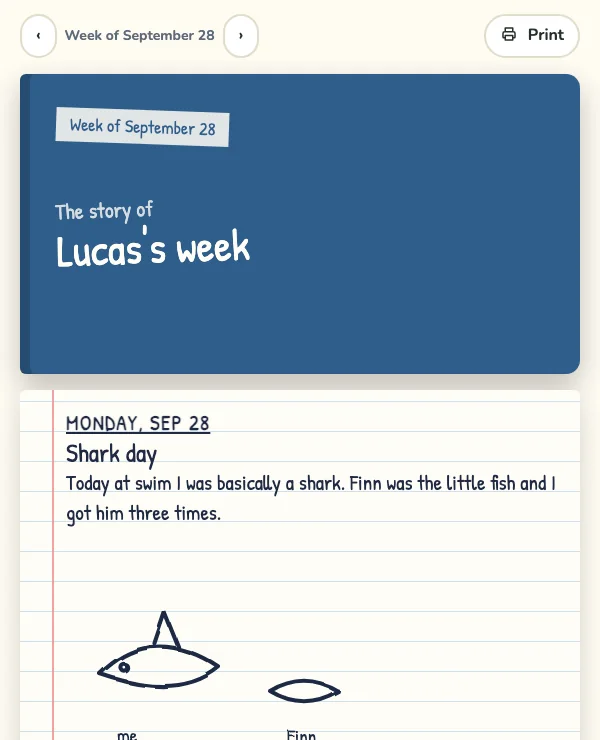
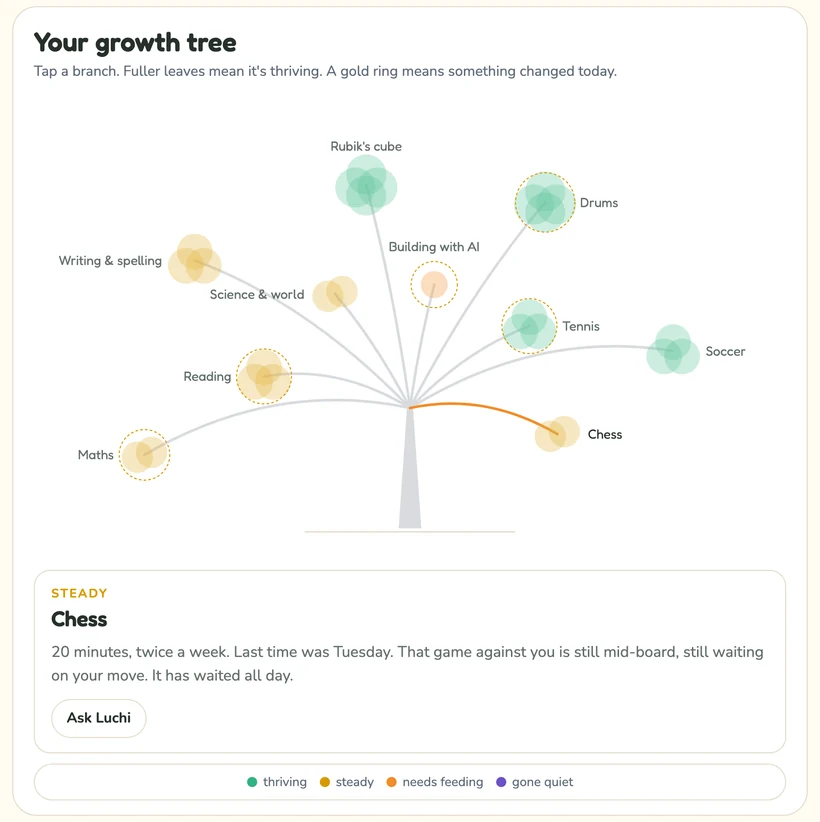
The reason explain-it-back is hard to hold onto is that it happens once, verbally, and then it is gone. This is the shape we built for that problem, shown rather than asserted.
The research under this page
Two sources. The first decides the page's whole argument and is the one with the longest reach between what it measured and what this page does with it, so that gap is stated rather than smoothed over. The second is why "explain it without looking" is the test rather than a nicety.
- Furtak, Seidel, Iverson & Briggs, 2012 — Experimental and quasi-experimental studies of inquiry-based science teaching: a meta-analysis. Review of Educational Research, 82(3), 300–329. (37 experimental and quasi-experimental studies published 1996–2006, coded on a framework that "distinguishes between cognitive features of the activity and degree of guidance given to students". "The overall mean effect size is .50. Studies that contrasted epistemic activities or the combination of procedural, epistemic, and social activities had the highest mean effect sizes. Furthermore, studies involving teacher-led activities had mean effect sizes about .40 larger than those with student-led conditions.") The load-bearing source: 37 studies, overall mean effect .50, and teacher-led conditions about .40 larger than student-led. This page uses it for one claim only — that guidance is the active ingredient in science learning, which is what makes hands-off parenting and a fluent chatbot the same failure. Read the reach honestly: these are classroom studies from 1996–2006 with no AI in them, so applying the result to a chatbot is this page's inference, and the teacher-led finding compares instructional conditions rather than endorsing an adult taking the project over. What it does not show: A meta-analysis of CLASSROOM science teaching, not of parents helping at the kitchen table, and its studies predate 2006 — so there is nothing in it about AI, and the page says so rather than implying otherwise. The teacher-led advantage is a comparison between instructional conditions, not a licence for an adult to take the work over. It is cited for one thing: in science, guidance is the active ingredient and unguided activity underperforms it — which is what makes "let the AI work it out" and "leave them to work it out alone" the same mistake in two costumes.
- Chi, Bassok, Lewis, Reimann & Glaser, 1989 — Self-explanations: how students study and use examples in learning to solve problems. Cognitive Science, 13(2), 145–182. (Talk-aloud protocols from students studying worked examples of mechanics problems. "We find that 'Good' students learn with understanding: They generate many explanations which refine and expand the conditions for the action parts of the example solutions, and relate these actions to principles in the text. These self-explanations are guided by accurate monitoring of their own understanding and misunderstanding." The contrast is the finding that matters here: "'Poor' students do not generate sufficient self-explanations, monitor their learning inaccurately, and subsequently rely heavily on examples.") Why the explain-it-without-looking question is diagnostic rather than merely nice. The finding this page leans on is the contrast: students who learned generated their own explanations, while the others under-explained, "monitor their learning inaccurately, and subsequently rely heavily on examples". Inaccurate self-monitoring and leaning on the worked example travel together, which is precisely the state a generated write-up produces. Talk-aloud protocols with a small number of students on mechanics problems, so it is cited for the mechanism and not as an effect size. What it does not show: A small protocol study of university students on physics problems, and correlational in its design — good and poor students differed in how much they explained to themselves, which is not the same as showing that making someone explain causes the gain. Cited for the mechanism and for the direction of the dependence (poor explainers leaned on the worked example), never as an effect size, and never as a measurement about children.
Questions parents ask
- Can my child use AI for their science fair project?
- For two of the six parts, usefully. It is good for generating a long list of possible questions that your child then rejects most of, and it is good for the poster — layout, spelling, what goes in which column. It should not design the method or the controls, should not run or record the results, and should not explain what the results mean until your child has explained it first. The reason is not a rule about cheating: a meta-analysis of 37 science-teaching studies found that unguided, student-led activity underperformed teacher-led activity by about .40 in effect size, and a chatbot answering questions is not guidance either. The method and the controls are where the learning is, so that is the part to keep.
- How can I tell if the AI did my child's project?
- Ask four questions, early enough that the answers can still change something. "What is your control, and why that one?" — a child who designed the experiment answers at once. "What would have made you wrong?" — a generated write-up never volunteers this, because it is built to sound settled. "Explain this bit to me without looking at it" — Chi's study found that under-explaining and misjudging your own understanding travel together, so a confident reading-aloud is not the same as an explanation. And flatly, with no edge in it: "which part did the computer help with?" A child who can tell you it listed ideas and fixed the title has done the project.
- Is it cheating to use AI on a science project?
- That depends on which part, and your school's policy is the first place to look rather than this page. The distinction that holds up is between presenting the work and producing it: tidying a poster title is in a different category from generating a method or writing a conclusion before the data exists. The last one is the only item on this page that is dishonest rather than just unhelpful, because it describes a result that was not observed. If what you are weighing is the accusation side of this rather than the design side, there is a separate page on it.
- What if the experiment does not work?
- Then they have a project. A clean negative result with a sound method is better science than a tidy positive one, and saying that out loud BEFORE the data arrives is the single most useful thing a parent can do — because it is what stops the data getting quietly helped. Three trials and an honest anomaly beats one trial and a confident conclusion, at the fair and everywhere else. The one thing worth protecting if time is short is the middle of the project: the method and the controls, which is also the first thing a judge asks about.
The explaining, kept
The move this page keeps coming back to — have them explain it in their own words before anything is typed — is how Luchi works. A kid builds something, Luchi asks why it works, and you get a short weekly note written from what they actually said. For a project you are trying to keep theirs, that is the part worth having a record of.
Part of the series: How to end the daily homework battle
Related guides in this series
- Teaching kids to start homework without reminders — Independence is a prompt you remove on purpose, not a trait you wait for. A five-rung ladder from "you say it daily" to "you only ask afterwards", with how long each rung takes.
- Seven practical homework focus strategies — Seven things that help once they have started, in the order worth trying them — plus an honest table of which rest on solid evidence and which do not.
- What parents should know about AI homework helpers — Unguarded AI help measurably lowered later unaided test scores; guardrails removed the harm. What is known, what is not, and five questions to ask any product.
- AI homework help for kids — Where the line sits between help and doing it for them, subject by subject — plus a five-step routine for one hard question and five questions to ask any homework product.
- Is my kid cheating with AI? — Why AI detectors are not reliable enough to accuse a child on, the ninety-second check that is, and what to do about each of the four things you are likely to find.
- The after-school hour, without the nagging — The fight is about the forty minutes before homework. A five-block plan, the four traps that turn a routine back into nagging, and the research that makes it work.
- Is your child actually learning from AI? — Fluent output is not learning. The three signs of real learning, the three signs the tool did the thinking, and a five-point checklist a parent can run on any AI app tonight.
- Your child has been accused of using AI — The detectors are published as unreliable by the people who test them. What to do in the first hour, what to ask the school, and what it calls for in each of the four things it might actually be.
- When reading is hard: what AI helps with, and what it hides — One sentence from a child can mean three different problems, and they want opposite responses. A ten-minute check that tells you which, what read-aloud support actually measures, and the dull thing with the best evidence.
- My child just asks the AI for the answer — Not laziness — a help-seeking failure documented in tutoring software twenty years before chatbots. The one change with a measured effect, and the commit-first rule you can start tonight.
- Let the AI mark the draft, not write it — The feedback research says it has to be nonevaluative, supportive, timely and specific — and a chatbot’s default reply fails three of the four. The sentences that fix that, and why the child does the typing.
- Studying for a test: what goes on tonight’s list — Eleven topics, three evenings. Asking what they feel shaky about is the one input that has been measured and found uncorrelated with what they actually know — so sort it in eight minutes instead, and do not cross anything off after one right answer.