Winter break projects a kid actually finishes
The problem with a long break is never a shortage of ideas. It is that six of them get started and none of them get finished, and a child who abandons six things in a row concludes something about themselves that is not true. This page is built around one variable — whether the finish line was visible on day one — with five projects sized to cross it, the three sessions that get one done, and an honest reason why none of this is catch-up work.
Six started, none finished
If you have been through a long break with a seven-to-twelve-year-old, you know the shape of it. An enormous idea on the first morning, a burst of real energy, then a slow fade into something else — and by the end of the week the house contains six half-things and a child who is slightly embarrassed about all of them. The usual diagnosis is attention span. It is almost always scope.
The useful definition of finished is not "they stopped". It is: somebody who was not in the room can use it, play it, follow it or watch it, without you standing beside them explaining. That is a harsh test, and it is the only version of done that produces the thing you actually want — a child who can say "I made this" to a grandparent on a video call and then answer a question about it.
Everything below is sized to pass that test inside a few hours spread across a few days. If your break is short, that is fine; nothing here assumes a length, and a project that fits two afternoons is a better project than one that needs nine.
If you want the whole week planned out half-day by half-day instead
Decide the when before the break starts
The single highest-return thing you can do takes about ninety seconds and happens before the break begins: write down when and where the project happens. Not what it is — when.
This is one of the better-evidenced small interventions in psychology. Gollwitzer and Sheeran pooled 94 independent tests of what they call implementation intentions — a plan that "spells out the when, where, and how of goal striving in advance" — and found a positive effect of medium-to-large magnitude, d = 0.65, on actually attaining the goal. Their framing is the part worth stealing: holding a strong intention "does not guarantee goal achievement, because people may fail to deal effectively with self-regulatory problems during goal striving". Wanting to was never the missing piece. Two caveats: the studies are of adults, and mostly of goals the person already wanted. It raises the odds of starting; it cannot make a child want to.
So the fridge gets one sentence, in your child's handwriting: "After breakfast on the second day, at the kitchen table, we open the project." That is the whole intervention, and it removes the negotiation that kills more projects than boredom does — the daily re-decision about whether today is a project day.
The other half is who picks. Your child picks what to make; you hold when it happens. The evidence on choice is reliable and modest, and modest is the operative word: a meta-analysis finds a real effect on motivation, not a transformative one. Choice raises the odds that they start. It does not do the finishing.
Five projects with a visible finish line
Each one is chosen because "done" is a thing you can watch happen, not a feeling. The right-hand column is what it costs you, honestly, including the part where you have to not help.
| Project | Done means | What it costs you |
|---|---|---|
| A one-rule game. | Somebody who was not there plays it and works out the controls without being told. | Two sessions, a device for one. Refuse every request for a second level until version one has been played by a human. |
| A how-to guide for the thing they are the house expert on. | A sibling or a grandparent follows it start to finish and asks you nothing. | An hour and some paper, plus your willingness to follow the instructions exactly as written when they fail. |
| A museum of five objects from around the house. | Five labels written and taped up, and a tour given out loud to whoever is in. | An hour, index cards, tape. The hardest part is capping it at five. |
| A quiz about the people in this house. | It gets played at a table, out loud, and somebody loses. | An hour. Every question written before anyone plays — the actual work, and the bit that gets skipped. |
| A two-minute recorded explainer of something they made. | It gets played to a person who was not there, in a take your child chose to keep. | Twenty minutes and a phone. Expect two false starts, and do not edit it for them. |
Three sessions, and the third is the one everybody skips
- 1. Session one — shrink it, out loud, together Your child will arrive with something four times too big. Do not say no; ask what the smallest version that still counts would be. A game with one rule instead of five levels. A museum of five objects instead of the whole house. Write the small version down and leave the big one underneath it as "version two" — what makes a child accept a smaller scope is believing the bigger one is still allowed later. End before any building starts; twenty minutes is plenty, and stopping while they are keen is deliberate.
- 2. Session two — build it, and stop while it still works The session ends with the thing in a working state, not mid-surgery. A half-finished change is where a project dies over a break: tomorrow the child opens something broken whose shape they no longer remember. Ten minutes before you stop, say so — "last change, then we leave it working." If a tool or an AI is involved, your child is the one deciding what happens next and saying why; if they are watching something get made for them, nothing on this page is happening.
- 3. Session three — show it to a human, then declare it done This gets dropped because it feels like a formality, and it is the one the whole project was for. Get a real audience — the other parent, a sibling, a grandparent on a call — and have your child hand it over without explaining. Then three questions, in this order: what did you make, what went wrong and how did you fix it, what would you do next. Then say the words out loud: it is finished. Children are rarely told a thing is done; they are usually just allowed to drift off it, which is why so few of them know what finishing feels like.
What "small enough to finish" looks like
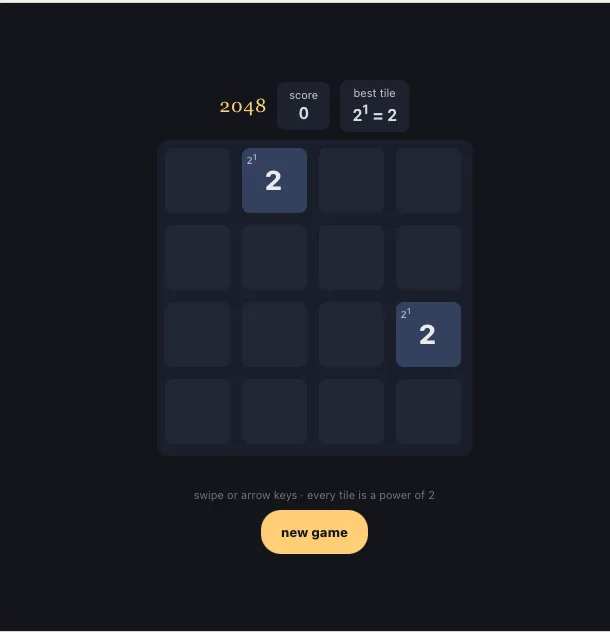
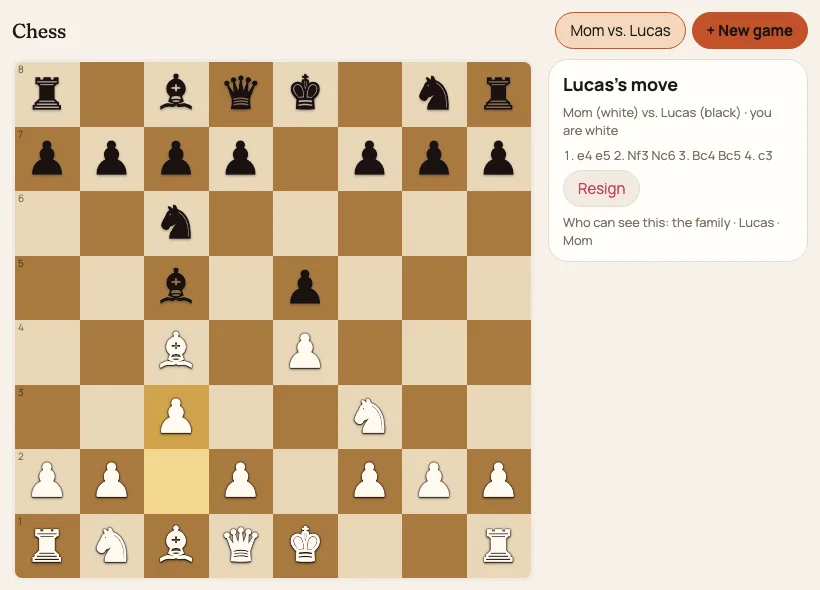
Two games built with Luchi, shown rather than described so the scale is checkable. They are deliberately the size this page argues for: one idea, one screen, playable in a minute, no levels and no menus.
This is not catch-up work, and here is the honest reason
Every seasonal page eventually tries to sell you a worksheet pack on the grounds that your child is losing ground. The research usually gestured at is Cooper and colleagues' meta-analysis of summer vacation, and it is worth reading properly rather than through a marketing summary. What it found: "the summer loss equaled about one month on a grade-level equivalent scale, or one tenth of a standard deviation relative to spring test scores", that "the effect of summer break was more detrimental for math than for reading and most detrimental for math computation and spelling", and that the effect grew with grade level. Real, and worth knowing — and a measurement of a ten-week American summer, concentrated in exactly the two most drill-shaped skills, in older students more than younger ones.
Nobody has measured a two-week winter break, and this page is not going to pretend the finding scales down to one. If your child is behind in arithmetic and you want ten minutes of practice a day, that is a reasonable thing to do for its own reasons — but do not do it because a holiday is an emergency, and do not let it displace the project. The thing that survives a break is not retained fluency. It is a thing they made and can still describe a month later.
Ten standalone activities, if you want an afternoon rather than a project
The research under this page
Three sources. One of them is here to argue against the thing a page like this is normally used to sell, and is cited for exactly that.
- Gollwitzer & Sheeran, 2006 — Implementation intentions and goal achievement: a meta-analysis of effects and processes. Advances in Experimental Social Psychology, 38, 69–119. ("Holding a strong goal intention (‘I intend to reach Z!’) does not guarantee goal achievement, because people may fail to deal effectively with self-regulatory problems during goal striving." Across 94 independent tests, forming an implementation intention that "spells out the when, where, and how of goal striving in advance" had "a positive effect of medium-to-large magnitude (d = .65) on goal attainment", and was effective at "promoting the initiation of goal striving" as well as shielding a pursuit already under way.) The basis for writing the when and where down before the break. Adults, and mostly goals they already held — so it supports "naming the time raises the odds of starting", not "a plan creates motivation". What it does not show: Adults, across many goal domains, and mostly goals the person already wanted. It is evidence that naming the when and where in advance raises the odds of starting — not evidence that a plan makes a child want to do the thing, and not a study of children on a school holiday.
- Patall, Cooper & Robinson, 2008 — The effects of choice on intrinsic motivation and related outcomes: a meta-analysis of research findings. Psychological Bulletin, 134(2), 270–300. Why your child picks the project and you hold the schedule. The effect of choice is reliable and modest, and this page says modest rather than implying more. What it does not show: The effect of choice on motivation is reliable and modest. Modest is the operative word: choice raises the odds of starting, it does not make a child want to do maths.
- Cooper, Nye, Charlton, Lindsay & Greathouse, 1996 — The effects of summer vacation on achievement test scores: a narrative and meta-analytic review. Review of Educational Research, 66(3), 227–268. (39 studies reviewed, the 13 most recent meta-analysed. "The meta-analysis indicated that the summer loss equaled about one month on a grade-level equivalent scale, or one tenth of a standard deviation relative to spring test scores. The effect of summer break was more detrimental for math than for reading and most detrimental for math computation and spelling", and "the negative effect of summer did increase with increases in students’ grade levels".) Cited AGAINST the catch-up pitch. It measures a ten-week summer, with the loss concentrated in computation and spelling and growing with grade level. It is a reason not to buy a holiday worksheet pack, not a reason to buy one. What it does not show: CITED AGAINST THE OBVIOUS READING. It measures a TEN-WEEK American summer, with the loss concentrated in computation and spelling and growing with grade level. Nobody has measured a two-week winter break, and this page does not pretend the finding scales down to one. It is a reason not to sell a holiday worksheet pack, not a reason to buy one.
Questions parents ask
- How long should a winter break project take?
- Short enough that the finish line is visible from the first session — in practice, a few hours over two or three sittings. Breaks are different lengths in different households, so the better question is not how many days you have but whether your child could describe the finished version in one sentence on day one. If they cannot, the project is too big, and no amount of time fixes that.
- My child quits halfway through everything. Is that normal?
- Extremely, and it is usually a scoping problem wearing a motivation costume. A child who abandons a four-year game idea has not failed at persistence; they have correctly noticed the thing is not reachable. The fix is to make the first finishable version absurdly small and to protect "version two" as a real promise rather than a brush-off, so shrinking the plan does not feel like losing an argument.
- Does a break project have to be off-screen?
- No, and the screen-free framing is why most break pages are not much use. The useful distinction is not screen versus no screen; it is directing versus consuming. An hour deciding what a game should do, watching it not work and saying what to change is not the same hour as an hour of autoplay, and treating them as equivalent is what a screen-time budget mostly gets wrong.
- Will my child fall behind over the break?
- Less than the worksheet advertising implies. The meta-analysis people cite measured about one month of grade-equivalent loss, a tenth of a standard deviation, over a TEN-WEEK summer, worst in maths computation and spelling. Nobody has measured a two-week winter break. If daily arithmetic practice helps your particular child, do it on its own merits — but a holiday is not an emergency, and a finished project is worth more at the end of one than a stack of completed sheets.
One thing, finished, by the end of the break
Luchi is built around exactly the loop this page describes: a kid decides what to make, builds it a piece at a time with a coach that asks what should happen next rather than handing over a finished thing, and ends up with something they can show you — plus a short note, in their own words, about how they made it.
Part of the series: Teaching kids about AI
Related guides in this series
- How to explain AI to a child — Simple analogies and sample scripts by age (5–12), plus the three things every kid should understand about AI.
- AI activities for kids — 10 free, screen-smart activities to explore how AI works together — no coding, no sign-up, mostly off the screen.
- Fall break activities for kids — A half-day-by-half-day plan for five unstructured days — ten low-prep blocks, screen and off-screen alternating, ending with your child explaining what they made.
- AI tools for kids — A parent’s shortlist of genuinely kid-appropriate AI tools — what to look for, what to avoid, and how to tell a real kid tool from a repackaged chatbot.
- AI tools that teach kids to think, not just get answers — The one testable property that separates a thinking tool from a vending machine, what happened when someone measured the difference, and the ten-minute test you can run tonight on whatever your child already uses.
- How do I know if what the AI told my kid is true? — The research says the move is to leave the answer, not to stare at it harder — and that the technique which works best is the one people like least. Four ways it goes wrong, and the check that catches each.
- How to teach a kid to write a good AI prompt — A list of fifty prompts teaches nothing, because the skill is producing the question. The three decisions that make a prompt good, a try-it bench on the page, and the one rewrite with a measurement behind it.
- Is it cheating if my child makes art with AI? — Two questions in one coat: a rules question with a clear answer, and an effects question where the best study points both ways — individually better, collectively more similar. What to say, and the three situations that differ.
- The five-minute quiz that beats re-reading — Re-reading raised students’ confidence; being tested raised what they still knew a week later. The four instructions that make an AI run the tested version, and when to come back to it.