My child just asks the AI for the answer
This has a name, a research literature, and — unusually — one change with a measured effect. It is not laziness, and treating it as laziness is why "just try it yourself first" does not work. Here is what is actually happening, the one rewrite that has been measured to remove the harm, and a rule you can start at the kitchen table tonight.
It is not laziness, and that changes what works
Long before chatbots, researchers studying tutoring software had this exact problem and gave it a name: help-seeking. The systems offered hints. Students either never asked for them or clicked straight through to the answer, and Aleven and colleagues, reviewing that literature, reported that "although effective help-seeking behavior in ILEs is related to better learning outcomes, learners are not using help facilities effectively."
Read that twice, because it reframes your kitchen table. Asking for help well is a skill — a metacognitive one, requiring a child to notice they are stuck, work out what kind of stuck, and ask for the smallest thing that would unstick them. Children are not born with it and school rarely teaches it. The AI did not create this; it removed the last bit of friction that was hiding it.
Which is why the instruction every parent tries first — "try it yourself before you ask" — mostly fails. It asks the child to apply the skill they do not have, at the moment it is hardest, with a shortcut in arm’s reach. The things that do work change the shape of the ask instead.
The wider version: what good AI homework help looks like · If what you are worried about is the school’s view of it
Four things that are usually going on
- The question they typed is answer-shaped — A child types the exercise. Verbatim. Not because they want to cheat, but because the exercise is the only form of words they have for what they want. A tool handed a question gives an answer — the request never contained a request for help. This is the most common case and the easiest to fix, because it is a phrasing problem rather than a character problem.
- A hint costs more work than the answer — A hint means reading it, understanding it, and then still doing the problem. The answer means copying. For a tired child at eight in the evening those are not close, and no amount of encouragement changes the arithmetic. The lever is the cost, not the motivation.
- They cannot tell which kind of stuck they are — "I don’t get it" covers at least three states: I don’t know what the question is asking, I know what it asks but not how to start, and I started and got a number that looks wrong. Those want completely different help. A child who cannot name which one they are in will reach for the one response that covers all three.
- It worked, and nobody noticed — The page got finished, it was correct, and it came back marked fine. From the child’s side the strategy is working. Any approach that treats this as a confession to be extracted is fighting a thing that has been quietly rewarded for months.
The one change with a measurement behind it
Bastani and colleagues ran the comparison at scale with nearly a thousand high-school maths students. One group got an unguarded GPT-4 assistant; another got a version built to give hints rather than answers. The unguarded group did better on practice while they had it — and then scored about 17% lower on a later exam they sat without it. The hint-giving version essentially removed that harm.
Be careful what that does and does not say, because the overclaim is tempting. The guarded version did not make students better than students with no AI at all; it removed the damage. And these were high-school students doing maths in Turkey, not nine-year-olds. What transfers is not an effect size but a direction: the difference between harmful and harmless was a property of what the tool did when asked, not of how diligent the student was.
There is a second piece that explains why, and it is uncomfortable. Buçinca and colleagues found adults overrely on AI suggestions even when wrong, that adding explanations "does not appear to reduce the overreliance", and that what did work was cognitive forcing — making the person commit to their own answer before seeing the machine’s. The catch they report plainly: "people assigned the least favorable subjective ratings to the designs that reduced the overreliance the most." The thing that works is the thing nobody enjoys. Worth knowing before you introduce it at home and expect gratitude.
The same request, reshaped
This is the practical form of the finding above: the child still gets help, and the help stops being the answer. Read the left column as what gets typed now and the right as the swap — not as a script to recite, but as the shape to teach.
| What gets typed now | What to teach instead | Why this one |
|---|---|---|
| "A train leaves at 4:15 and travels 90 miles…" — the whole exercise, pasted. | "Ask me one question that will tell you whether I understand this problem." | Flips who is being examined. It is also the version a child can use when they genuinely have no entry point, so it does not require them to already know what they are missing. |
| "What is the answer to question 7?" | "I think the answer is 41 because I added the two totals. Tell me if my reasoning is wrong, but do not give me the number." | This is the commit-first move from the research, in one sentence. The guess goes on the record before the machine speaks, which is exactly the intervention that reduced overreliance — and the one people rated worst. |
| "Explain photosynthesis." | "Quiz me on photosynthesis, one question at a time, and don’t tell me if I’m right until the end." | Converts a passive explanation into retrieval, which is the better-evidenced use of the same five minutes. Also far harder to copy from. |
| "Write a paragraph about the water cycle." | "Here is my paragraph. Point at the two weakest sentences and say what is weak about them. Don’t rewrite them." | Keeps the child’s words as the object being improved. The rewrite is the part that teaches nothing, and it is the part these tools do most eagerly. |
The commit-first rule, starting tonight
- 1. Guess out loud before the tool is open One sentence, wrong is fine: what do you think the answer is, and why. Written on the page or said to you. This is the whole intervention and it takes eight seconds. The research reason is that a committed answer is something a child can compare against — without one, the machine’s answer is the only answer in the room and there is nothing to reason about.
- 2. Name the kind of stuck Three options is enough: I don’t understand the question, I don’t know how to start, or I got something and it looks wrong. Say which. It is a ten-second habit that does most of the work of the help-seeking skill, because a child who can name the state can ask for the right size of help — and you can hear instantly which problem you are dealing with.
- 3. Make the ask smaller than the problem The standing house rule: ask for the next step, not the answer. "What should I do first?" rather than "what is it?". If the reply contains the answer anyway — they often do — that is not your child cheating, and it is worth saying so out loud. Then have them close it and redo the step themselves.
- 4. End with explain-it-back, and nothing else When the page is done: explain to me how you got that, as if I don’t know. No marking, no follow-up questions, no lecture if it falls apart — just the question, every time, so it becomes the price of finishing rather than an interrogation. A child who knows it is coming asks differently all evening.
What it looks like when the child is the one deciding
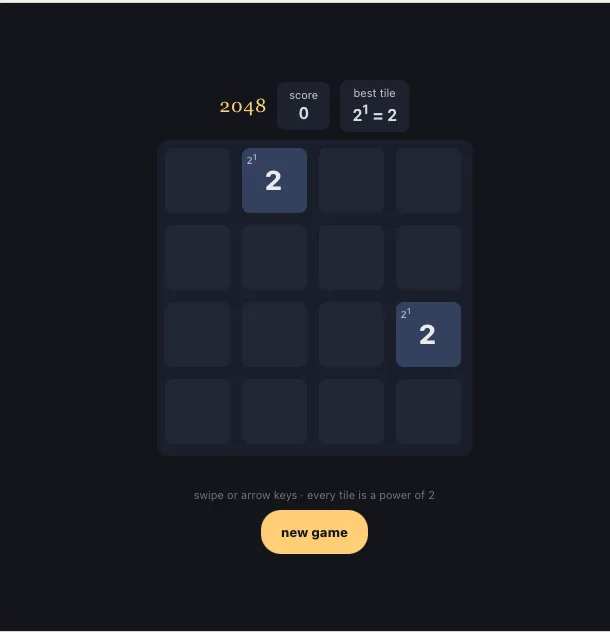
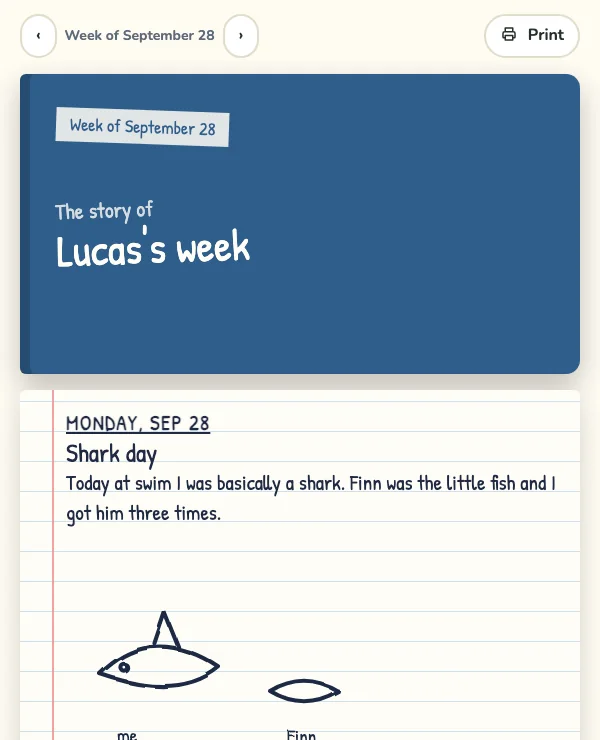
The same distinction, inside a product: the point is not that the machine refuses to help, it is that the child stays the one making the decisions and saying why.
The research under this page
Three sources. The first is why this is a skill rather than a character flaw; the second is the only measured comparison of answering against hinting; the third is why the fix that works is the one your child will like least.
- Aleven, Stahl, Schworm, Fischer & Wallace, 2003 — Help seeking and help design in interactive learning environments. Review of Educational Research, 73(3), 277–320. ("Many interactive learning environments (ILEs) offer on-demand help, intended to positively influence learning. Recent studies report evidence that although effective help-seeking behavior in ILEs is related to better learning outcomes, learners are not using help facilities effectively… The interaction between metacognitive skills and cognitive factors is important for appropriate help seeking.") The review that named the problem and found learners do not use on-demand help well even when it helps. Tutoring software in the 2000s, not chatbots — cited for the mechanism and for the fact that this predates AI by twenty years, not for any number. What it does not show: A selective review of tutoring software from the 2000s — hint buttons in maths tutors, not chatbots, and mostly older students. It is cited for the mechanism and for the chronology (this failure mode is twenty years older than generative AI), never for an effect size, and it does not measure anything about a child using an AI assistant on homework.
- Bastani, Bastani, Sungu, Ge, Kabakcı & Mariman, 2024 — Generative AI without guardrails can harm learning: evidence from high school mathematics. (Nearly 1,000 students; an unguarded GPT-4 assistant raised practice scores but LOWERED later unaided exam scores by about 17%, an effect essentially eliminated by a hint-giving tutor version.) The answering-versus-hinting difference, cited with its ceiling attached: the guarded version removed the harm rather than producing a gain, and the students were high-schoolers doing maths. What it does not show: High-school maths in Turkey, not elementary school, and the "guardrails" arm showed no POSITIVE exam effect either — it removed the harm. Anyone citing this as proof that AI tutoring raises attainment is citing the opposite of what it found.
- Buçinca, Malaya & Gajos, 2021 — To trust or to think: cognitive forcing interventions can reduce overreliance on AI in AI-assisted decision-making. Proceedings of the ACM on Human-Computer Interaction, 5(CSCW1), 1–21. (N = 199. "People supported by AI-powered decision support tools frequently overrely on the AI: they accept an AI’s suggestion even when that suggestion is wrong", and adding explanations "does not appear to reduce the overreliance". Cognitive forcing — making the person commit to their own answer before they see the AI’s — "significantly reduced overreliance compared to the simple explainable AI approaches". The trade-off: "people assigned the least favorable subjective ratings to the designs that reduced the overreliance the most".) Why commit-first is step one, and why to expect complaints. Adults on a decision task, so no figure transfers — but the trade-off it measured is the one you are about to walk into. What it does not show: Adults in a controlled study on a decision task, not children on homework. Cited for the mechanism and for its uncomfortable trade-off — the intervention that worked best was the one people liked least — and never as a measured effect on a child.
Questions parents ask
- How do I stop my child using AI to get homework answers?
- Change the shape of the ask rather than policing the tool, because the only measured comparison points there: an unguarded assistant left students about 17% worse on a later unaided exam, while a hint-giving version removed that harm. At home the version of that is a rule, not a filter — guess out loud before the tool opens, name which kind of stuck you are, ask for the next step rather than the answer, and explain it back at the end. Banning the tool outright works until they are somewhere you are not.
- Is my child cheating?
- Usually they are doing the thing that got the page finished, which is a different problem and wants a different response. The behaviour has been documented in learning software since long before chatbots — one review found that students given on-demand hints simply did not use them well, even though using them well was linked to learning more. Treat it as a missing skill first. If the question is really about the school’s view of it, that is a separate conversation and we have a page on it.
- Should I just take the AI away?
- You can, and for a specific stretch of work it is sometimes the right call. What it does not do is teach the thing you want, because the skill in question — asking for the smallest help that unsticks you — only gets practised when help is available. The research direction is that the harm sat in what the tool did when asked, not in its presence. So the more durable move is to change what your child asks for, and to be the one who taught them that, rather than to remove the tool and meet it again unsupervised later.
- My child says asking for a hint is pointless because the answer is right there.
- They are describing the problem accurately, and it is worth agreeing with them. A hint costs real work and the answer costs none, so the honest reply is that the hint is the point — the page is not the thing being produced, their understanding is. One thing that helps more than arguing: make the final step explain-it-back, every time, so the thing being delivered at the end of homework is an explanation rather than a finished sheet. The incentive changes before the attitude does.
A tool that asks before it answers
This is the whole design question behind Luchi. A kid builds something real, Luchi asks what they are trying to make and why instead of handing it over, and you get a short weekly note in the kid’s own words — the explain-it-back step, already done.
Part of the series: How to end the daily homework battle
Related guides in this series
- Teaching kids to start homework without reminders — Independence is a prompt you remove on purpose, not a trait you wait for. A five-rung ladder from "you say it daily" to "you only ask afterwards", with how long each rung takes.
- Seven practical homework focus strategies — Seven things that help once they have started, in the order worth trying them — plus an honest table of which rest on solid evidence and which do not.
- What parents should know about AI homework helpers — Unguarded AI help measurably lowered later unaided test scores; guardrails removed the harm. What is known, what is not, and five questions to ask any product.
- AI homework help for kids — Where the line sits between help and doing it for them, subject by subject — plus a five-step routine for one hard question and five questions to ask any homework product.
- Is my kid cheating with AI? — Why AI detectors are not reliable enough to accuse a child on, the ninety-second check that is, and what to do about each of the four things you are likely to find.
- The after-school hour, without the nagging — The fight is about the forty minutes before homework. A five-block plan, the four traps that turn a routine back into nagging, and the research that makes it work.
- Is your child actually learning from AI? — Fluent output is not learning. The three signs of real learning, the three signs the tool did the thinking, and a five-point checklist a parent can run on any AI app tonight.
- Your child has been accused of using AI — The detectors are published as unreliable by the people who test them. What to do in the first hour, what to ask the school, and what it calls for in each of the four things it might actually be.
- When reading is hard: what AI helps with, and what it hides — One sentence from a child can mean three different problems, and they want opposite responses. A ten-minute check that tells you which, what read-aloud support actually measures, and the dull thing with the best evidence.
- Let the AI mark the draft, not write it — The feedback research says it has to be nonevaluative, supportive, timely and specific — and a chatbot’s default reply fails three of the four. The sentences that fix that, and why the child does the typing.
- A science fair project with AI, without the AI doing it — Teacher-led science beat student-led by about .40 in effect size across 37 studies — so hands-off and hand-it-over fail the same way. Which two of six parts a chatbot helps with, and the four questions that prove the project is theirs.
- Studying for a test: what goes on tonight’s list — Eleven topics, three evenings. Asking what they feel shaky about is the one input that has been measured and found uncorrelated with what they actually know — so sort it in eight minutes instead, and do not cross anything off after one right answer.